What Age Should My Child Start Gymnastics? (The Answer Might Surprise You)

April 14, 2026
Most parents ask this question when their toddler is already climbing the furniture. Good news: that instinct is telling you something.

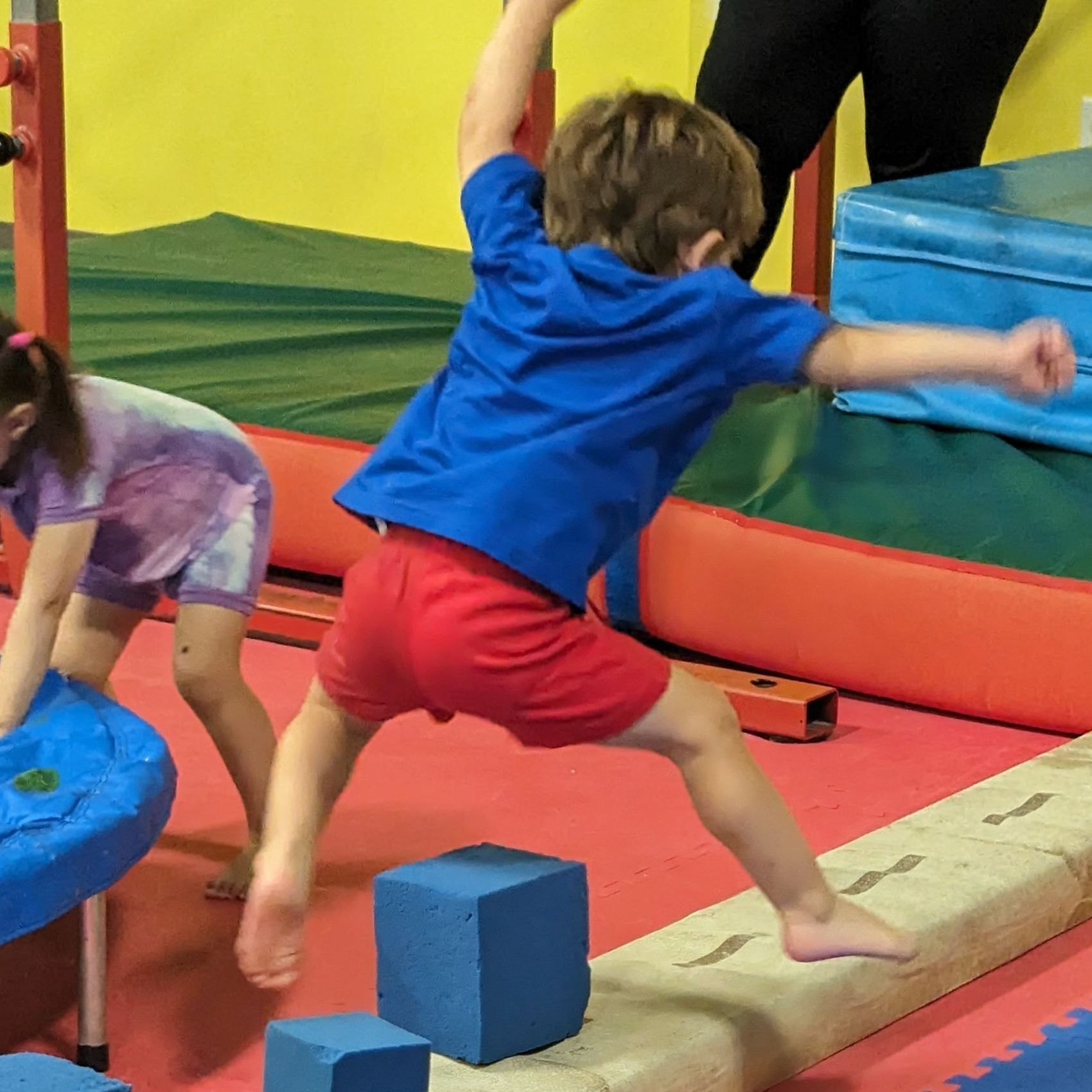
The short answer is earlier than you think. Kids as young as 18 months can benefit from structured movement classes. And by "benefit," I don't mean they're going to the Olympics. I mean they're learning to fall safely, control their bodies, and understand that hard things get easier with practice.

That last one is kind of a big deal.

There's No Perfect Age. There's a Right Program.

The gymnastics world has classes for kids as young as 5 months old. Parent-and-me programs at that stage are less about flips and more about sensory exploration: rolling, crawling, bouncing, figuring out where their body ends and the mat begins.

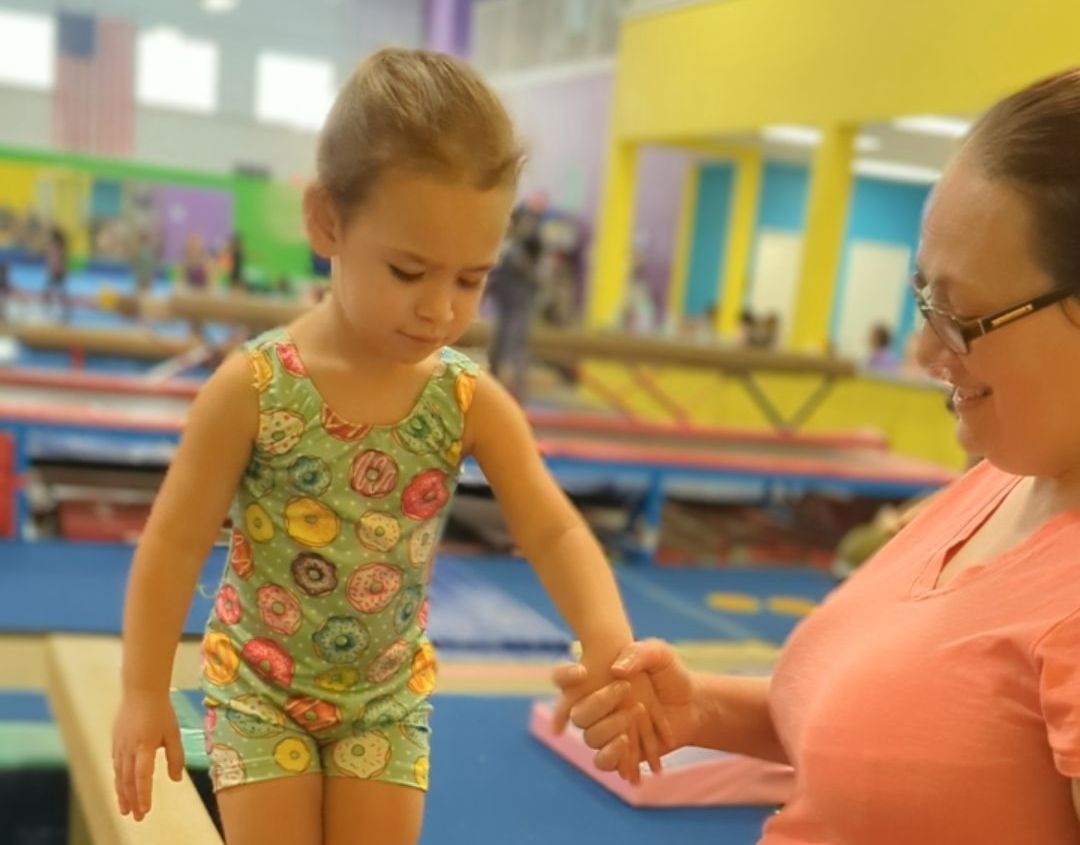
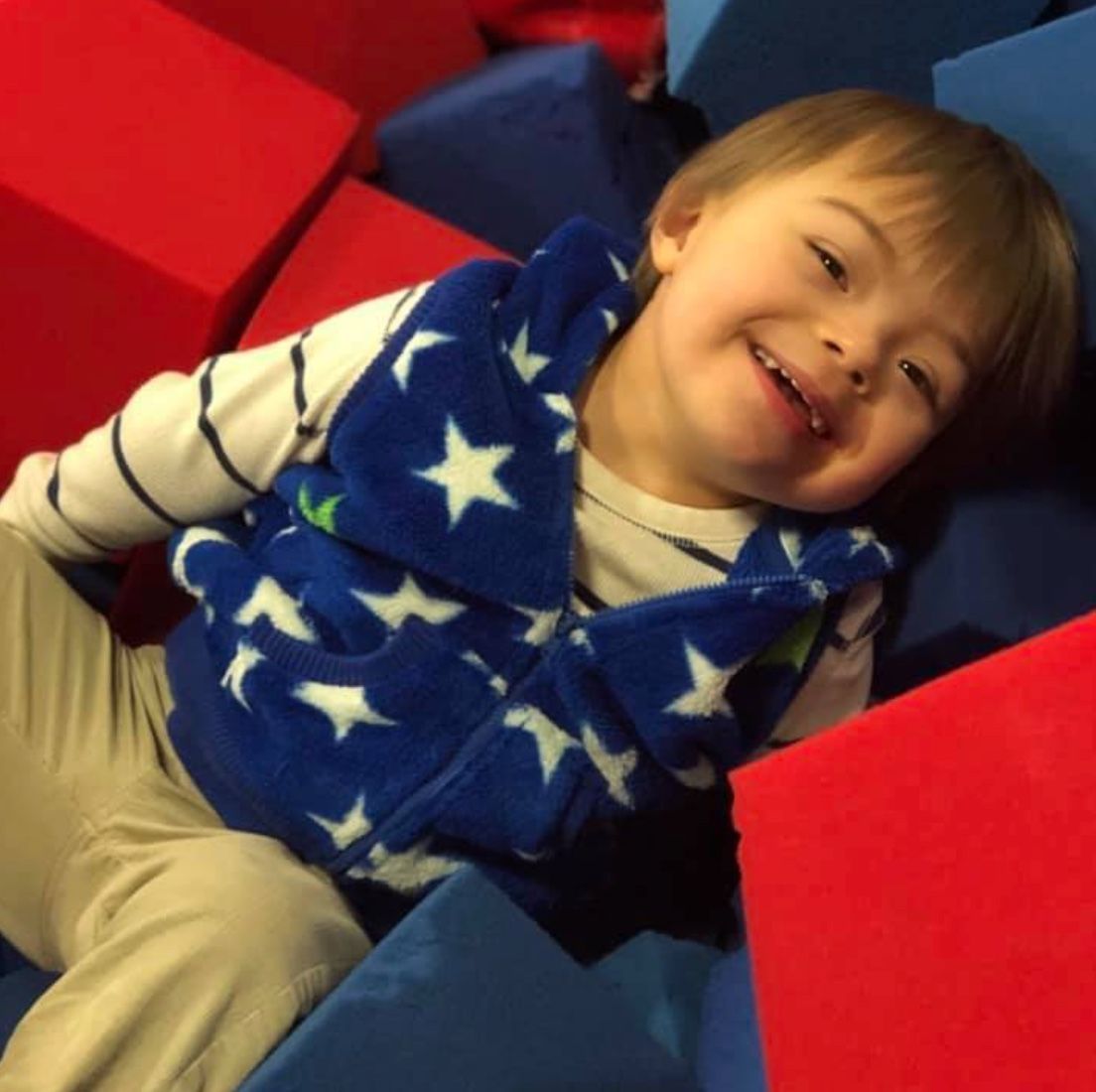
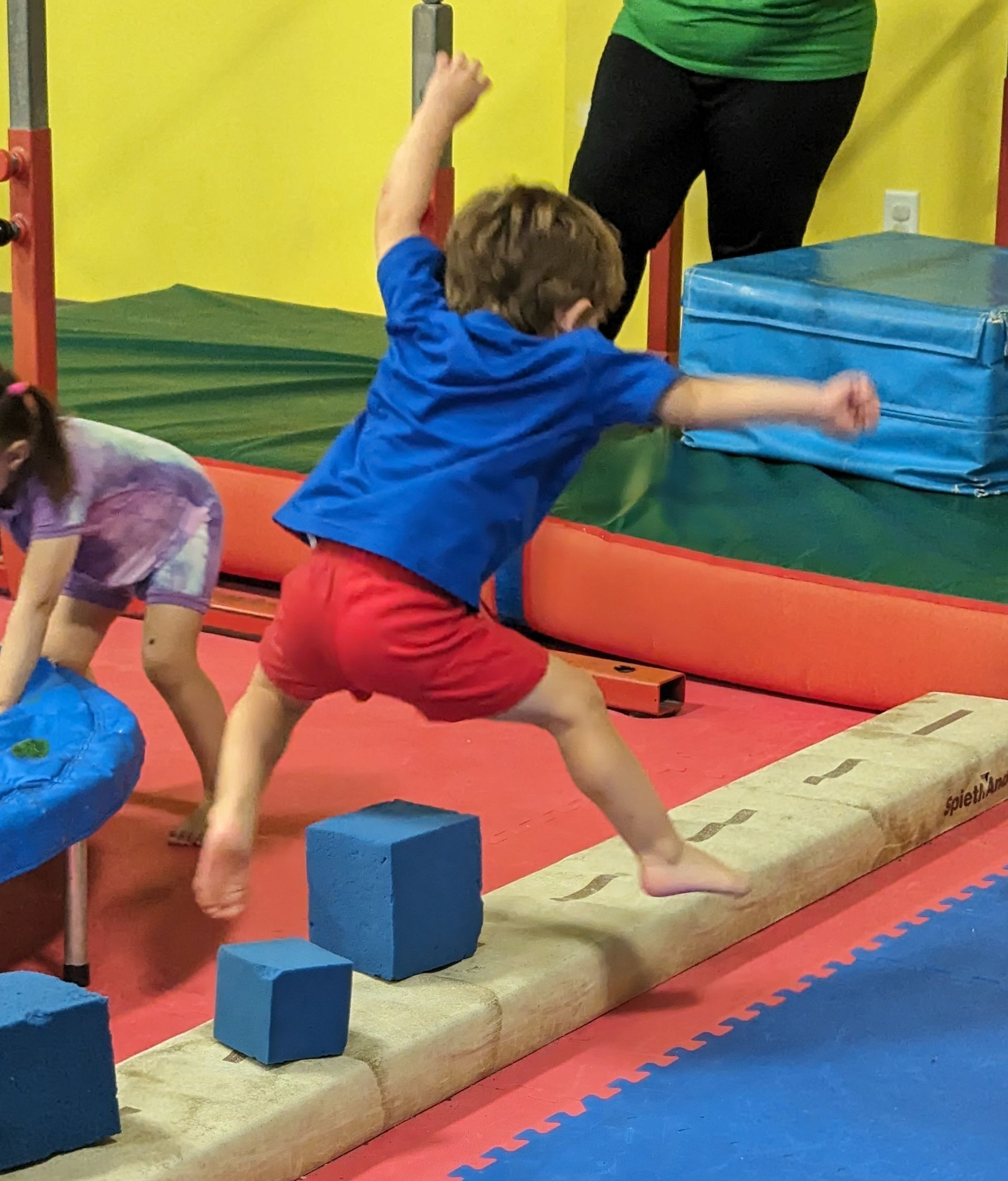
Around 18 months to 3 years, kids are ready for more. Somersaults. Balancing on a low beam. Jumping into a foam pit. These aren't just fun activities (though they are extremely fun). They're building the motor patterns that underpin every sport your kid might ever play.

By 3 to 5, they can start absorbing actual technique. Cartwheels. Handstands held for a half-second before collapsing. The early stages of real coordination.

After 5, kids can follow multi-step directions, handle structured group classes, and start progressing through levels in a meaningful way.

The Question Parents Actually Get Wrong

Most parents don't ask "when should we start?" They ask "when will they be any good?" Those are different questions.

Gymnastics at the early stages isn't about being good. It's about building the physical vocabulary that makes every other sport easier later. Kids who go through gymnastics tend to be more coachable, more spatially aware, and less afraid to try new things. A soccer coach somewhere is quietly thankful for this.

Starting at 2 doesn't mean committing to competitive gymnastics. It means giving your kid a head start on body confidence. Those are not the same thing.

Signs Your Child Is Ready

You don't need a formal checklist. If your kid is doing any of the following, they're probably ready: climbing everything in sight, jumping off things that make you nervous, asking to do cartwheels in the grocery store, or rolling across the floor for no apparent reason.

Children who seem fearless in movement often just need a safe, structured space to channel it. That's exactly what a good gym class provides.

Cautious kids do great too. The progression in a well-built program is slow enough that timid kids build confidence at their own pace. Coaches who are good at this job know how to read the room.

What to Actually Look For in a Program

Not all programs are built the same. A few things worth checking before you enroll:

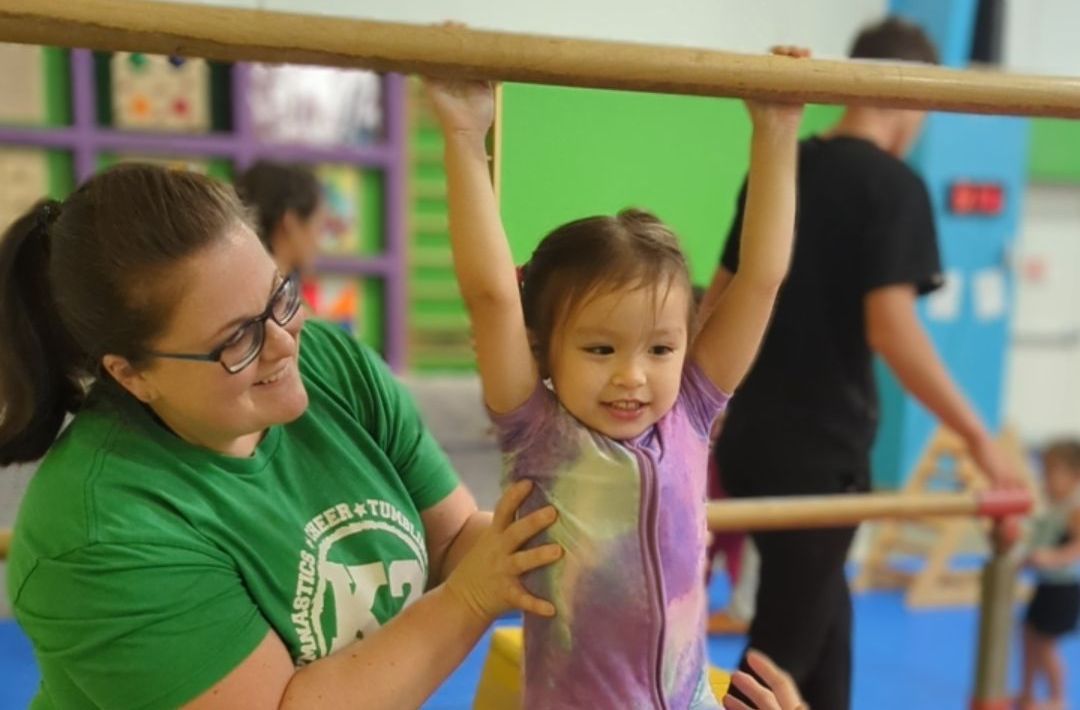
The student-to-teacher ratio matters a lot at early ages. A class of 12 toddlers with one instructor is controlled chaos at best. A class of 6 or 8 with two instructors is actual gymnastics.

Age-appropriate groupings matter too. A 4-year-old doesn't belong in a class with 8-year-olds, even if they're at a similar skill level. The developmental gap between those two ages is enormous.

Look for a program with clear progressions. Your kid should know what they're working toward, even if "next" means "holding a handstand for 3 seconds instead of 1." Goals matter at every level.

And find coaches who genuinely like kids. You'd think this is obvious. It isn't always.

Is It Ever Too Late to Start?

No. Genuinely, no.

Kids who start at 7 or 8 often catch up to peers who started younger within a few months, especially in recreational programs. They have longer attention spans and absorb corrections faster. A seasoned coach will tell you that a motivated 9-year-old is sometimes easier to teach than a distracted 5-year-old who's thinking about what's for lunch.

Even teenagers who've never touched a gymnastics mat can pick up tumbling skills, gain real flexibility, and get significantly stronger. It won't look like elite gymnastics. It'll look like a kid who can do a back walkover at 14 and thinks it's the coolest thing they've ever done. Which it is.

At K2 Academy in Cypress, TX

K2 has been running programs for kids starting at 5 months old since 2005. The Gym Bugs program catches them early, building body awareness through age-specific movement that actually matches where a toddler's brain is. Recreational classes take it from there, all the way through tumbling, ninja, cheerleading, and competitive tracks.

The class that fits a curious 18-month-old looks nothing like the class that fits an ambitious 8-year-old. K2 keeps student-to-teacher ratios low across every program so that difference actually shows up in how kids learn.

If you're on the fence, come watch a class. No commitment required, no awkward sales conversation. Just a gym full of kids figuring out what their bodies can do.

That's what we built it for.
August 12, 2026
Tryouts are over. Football season is starting. And if your kid just made a cheer team — or spent the summer watching YouTube back handspring tutorials and asking when they can learn — right now is the window to act. Fall tumbling class spots at K2 Academy in Cypress fill fast, and they fill from the inside out. Here's what to know before you wait too long. What Tumbling Classes at K2 Actually Cover Tumbling classes at K2 aren't a renamed gymnastics class. They're built specifically for floor skills: cartwheels, round-offs, back walkovers, back handsprings, and the progressions that connect them into combinations a cheer coach actually notices. That distinction matters. A lot of kids want tumbling without bars, beam, or vault. They want the floor. K2's tumbling program gives them exactly that, without asking them to invest time in equipment they don't care about. For cheerleaders, this is practical. School cheer programs and All-Star teams both weight tumbling heavily. A kid who shows up to tryouts with a clean back handspring has a different conversation with the coach than one who doesn't. That gap takes time to close, which is why the start date matters. Why August Is the Right Time — Not January Tumbling skills don't come fast. That's not a warning — it's just the truth about how physical skill acquisition works. The back handspring a kid is grinding on in October is the skill that finally clicks in February. The round-off improvement that starts in August shows up fully by November. Starting now means 5 to 6 months of reps before the next cheer tryout season opens. Starting in January means 2. There's also a scheduling reason. The families who keep tumbling classes running through the school year are the ones who built it into the routine before school started — not the ones trying to wedge it in after homework and sports have already filled the week. A class locked in early September is a habit. One added in late October is a negotiation with yourself every single week. Who the Program Is Built For K2's tumbling classes cover every level. True beginners start with cartwheels and handstands — the foundation skills that make everything else possible. Kids who already have a round-off are working on back handsprings. Advanced tumblers are connecting skills and working on twisting elements. You don't need a cheer background to enroll. Plenty of kids take tumbling because back walkovers look cool and they want to learn. That's a completely valid reason. The classes are structured, the progressions are real, and skill-level groupings keep the class from being 8 kids at 8 different places. K2 also offers private lessons in tumbling for kids who want to accelerate a specific skill outside of regular class time. Worth knowing if your kid has one skill they're chasing before a deadline. Getting Here From Tomball K2 is at 15255 North Eldridge Pkwy in Cypress, TX 77429. From most of Tomball, that's 15 to 20 minutes down 249 or Eldridge. Families from the Tomball area make that drive regularly — K2 has the program depth and the facility that justifies it. A 25,000 square foot gym with dedicated tumbling space runs differently than a converted strip mall with one spring floor. If you're comparing tumbling options near Tomball, the structured class track and skill progressions at K2 are worth the extra few minutes. Open gym time is not the same as a coached curriculum. How to Get Enrolled Fall tumbling enrollment is open at k2academy.com/register . If you're not sure which level fits your kid, call 281-655-7272 or email frontoffice@k2academy.com — the front office will figure out the right placement based on what your kid can do right now. Front office hours: Monday through Thursday 8am to 7:45pm, Friday 9am to 6:30pm. Fall spots fill as summer spots roll over. If a specific time works for your schedule, it's worth claiming before it's gone. Cheer season doesn't pause for the family that waited until September to get organized. That's what the tumbling program is built for. K2 Academy is located at 15255 N Eldridge Pkwy, Cypress, TX 77429. Serving families from Cypress, Tomball, and surrounding communities since 2005. Programs for ages 5 months through competitive-level athletes.
August 10, 2026
Most parents of kids with disabilities have had this experience: you search for gymnastics classes, you find a gym that looks good, and then you have a conversation where it becomes clear the gym isn't actually set up for your child. The coaches aren't trained for it, the class structure doesn't adapt, and the whole thing falls apart before week two. K2 Academy runs one of the only dedicated adaptive gymnastics programs in the northwest Houston area. It's called SOAR — Success and Opportunities Achieved through Recreation — and it's been part of K2's program offering long enough to have a real structure, a dedicated director, and a track record that parents in Cypress and Tomball talk about. What SOAR is (and isn't) SOAR isn't a modified version of a regular gymnastics class. It's a separate program designed from the ground up for children of all abilities and disabilities — physical, cognitive, sensory, developmental. The goals are the same things gymnastics has always been good at: building strength, coordination, balance, and confidence. The difference is the structure, the ratios, and the coaching approach. Skills that take a neurotypical 6-year-old a week to learn might take a SOAR student a month — and that's not a problem. The program is built around what your child can do and where they're headed, not around a standard progression chart. The three formats SOAR offers: 1:1 Private Sessions One-on-one time with a SOAR coach, customized specifically around your child. K2 doesn't walk your kid in and start teaching cartwheels on day one. The first two weeks are about getting comfortable: exploring the equipment, building trust with the coach, understanding what the gym is. After that, each session starts with something the child enjoys — whatever gets them engaged and moving — then moves into structured work across different parts of the gym, and ends with the child choosing one last activity before they leave. That last part matters more than it sounds. A kid who ends every class doing something they chose is a kid who looks forward to next week. Sessions run 30, 45, or 60 minutes, once a week. Monthly tuition runs $140 to $279 depending on session length. Shadow Class In a shadow class, your child joins a typical K2 gymnastics class alongside other kids — but with their own dedicated coach (the shadow) next to them the entire time. The shadow follows the same class plan, modifies skills where needed, provides hands-on guidance, and helps your child stay on track. If they get overwhelmed, the shadow handles it. The point isn't to make your child invisible in the class or to create distance between them and their peers. It's to make real participation possible. Shadow classes run 45–55 minutes, once a week, at $120 per month. RESPITE RESPITE is a structured drop-off event for children with disabilities and their siblings — essentially a parents' night out, specifically built for families who don't have easy access to traditional babysitting or kids' night-out programs. RESPITE requires a prior SOAR assessment before your child can attend. To get on the list, email the SOAR Director at senglebert@k2academy.com . How to get started Every child entering SOAR completes a preliminary assessment with a SOAR coach before the program begins. This isn't a hurdle — it's how K2 figures out which format fits your child, what modifications to plan for, and how to structure the first few sessions. The assessment form is at k2academy.com/soar-adaptive-gymnastics . After you submit it, a SOAR representative follows up directly. For questions before the assessment, contact the SOAR Director at senglebert@k2academy.com . She's the right person to talk to about whether SOAR is the right fit, which format to start with, and what to expect. SOAR Open Play Six times a year, K2 opens the gym for SOAR Open Play — an event for SOAR students and their siblings where parents stay and move through the equipment alongside their kids. One of the features is the Simmons Flyer, an adaptive swing designed for children with physical or sensory disabilities. It's set up and staffed by K2 coaches at every open play event. These events don't require the standard weekly commitment of 1:1 or shadow classes. They're a lower-stakes way to see how your child responds to the gym before committing to a full program — and a good option for families who are still figuring out whether gymnastics is the right fit. A note for Tomball families K2 Academy is at 15255 North Eldridge Pkwy in Cypress, TX 77429. Families from Tomball make the drive regularly — typically 15–20 minutes via 249 or Eldridge. For most activities that drive is a consideration. For adaptive gymnastics, it's usually the only option in the area. The SOAR program at K2 is one of the very few structured, dedicated adaptive gymnastics programs in northwest Houston. Families who need a program like this don't have a lot of alternatives closer to home. The front office hours are Monday through Thursday 8am–7:45pm and Friday 9am–6:30pm. You can also call 281-655-7272 or email frontoffice@k2academy.com if you want to talk through SOAR before starting the assessment process. That's what we built it for.
July 16, 2026
School starts in about six weeks. That sounds far away until it doesn't. If your kid has been in summer gymnastics at K2, you already know the routine. You know the parking lot, they know their coach, and you've both stopped thinking about it as a new thing. Fall registration is the move you make to keep that going. If your kid hasn't tried gymnastics yet, this is actually the better window to start than waiting until January. Here's why. Fall Classes Fill From the Inside Out This isn't a scare tactic. It's just how enrollment works. Families already in summer classes at K2 Academy get first pick of fall spots. They know which class time works, they know their coach, and they grab their slot early. By the time families wait until August to register, some sessions are already full — or the times that work for your family are gone. For Cypress and Tomball families who've been waiting to see if their kid is "into" gymnastics before committing to fall: summer is the window to find out. That decision has to come before the fall spots disappear. A New Season, A Real Reset Fall classes at K2 aren't just a continuation of summer. They're a reset — new progressions, new skill benchmarks, often new class groupings as kids age up. That's good news for beginners. Fall is when kids who've never been in a gym can start alongside peers who are also moving to their next level. Nobody's catching up. No awkward "everyone else has been here for months" energy. K2's programs run from Gym Bugs preschool gymnastics (starting at 5 months old) through school-age recreational classes, tumbling, Creative Arts dance, and competitive team programs via Team K2 and XCEL. The structure is built so every age group has a real entry point — not a generic beginner track that doesn't account for the difference between a 3-year-old and a 7-year-old. What Changes When School Starts Near Cypress and Tomball Two things shift in August. Class times tighten. The 10am Tuesday slot that worked all summer doesn't exist come fall. After-school spots and Saturday mornings fill fastest, and there are fewer of those than summer slots. Schedules get complicated again. Homework, sports, dinner — fall layers things back onto the week that summer strips out. The families who keep gymnastics going through the school year are the ones who locked in a time slot before the chaos started, not while scrambling through week 3 of school. If you're in Tomball, factoring in a 15-20 minute drive to North Eldridge is manageable when you plan for it. It's a different calculation when you're trying to figure it out mid-September. How to Get the Spot You Want K2 Academy is at 15255 North Eldridge Pkwy in Cypress, TX — easy to reach from the 77429 area and throughout Tomball. Registration is open now at k2academy.com/register . Not sure which program fits your kid's age or level? Call 281-655-7272 or email frontoffice@k2academy.com . The front office team walks you through the options and helps you find the right class. No gymnastics background required on your end to have that conversation. Fall spots go fast. That's not a threat. It's just how July works around here.
June 16, 2026
The body content of your post goes here. To edit this text, click on it and delete this default text and start typing your own or paste your own from a different source.
June 8, 2026
Most families put gymnastics in the "maybe next fall" pile. Busy spring schedules, end-of-year craziness, a vague sense that fall enrollment is when things start fresh. But if your kid has been pulling at you about gymnastics — or if you've been watching them bounce off every surface in your house — summer is actually the better time to start. Here's the case for it. 1. Kids learn faster when school isn't in the way When the school year is running, gymnastics is one activity competing with homework, sports, and the general weight of a full week. In summer, the schedule breathes. Kids come into class without the mental load of a school day behind them, and that matters. Focus is sharper, skills stick faster, and the jump from "first-class jitters" to genuine progress happens in weeks instead of months. Summer classes at K2 Academy in Cypress, TX run with the same structure and coaching quality as fall and spring — same progressions, same skill tracking. Starting in June doesn't mean starting behind. It means starting earlier. 2. The social piece is huge in summer Gymnastics classes are small. At K2, the coach-to-kid ratio keeps instruction personal, but kids still work alongside peers at similar skill levels. Summer is when friendships outside of school form — especially for kids changing schools in the fall, or for families new to the Cypress or Tomball area. The gym becomes a consistent anchor when the rest of the week is less structured. Parents in Cypress and Tomball who are new to the area find this especially useful. A reliable activity twice a week, with familiar faces, does a lot for a kid still getting their footing socially. 3. Preschoolers get a head start on kindergarten This one surprises people. Gymnastics for preschoolers isn't just somersaults and tumbling. K2's Gym Bugs program — built for kids 5 months through 5 years — works on listening, following multi-step directions, taking turns, and body awareness. Those are the same skills kindergarten teachers are building in September. Kids who spent the summer in a structured gymnastics class show up to school having already practiced the behavioral toolkit. If you've got a 3-, 4-, or 5-year-old in Cypress or Tomball and you're thinking about school readiness, an hour of preschool gymnastics each week is one of the more practical investments you can make before fall. 4. Active kids stay active all summer Here's the thing about a summer with no physical outlet: a 7-year-old who doesn't burn energy in a structured way is harder to live with than one who does. That sounds blunt, but it's what parents say. The trampoline, the foam pit, the skill progressions, the structured movement — kids leave K2 tired in the right way. Not overstimulated, screen-time tired. Physically worked-out tired. The kind that leads to good sleep and a reset nervous system. The gym is also air-conditioned. In Cypress in July, that's not a small thing. 5. There's no "right" start date — and summer has real advantages Fall enrollment has mystique because the school year starts in fall. But gymnastics doesn't require a clean calendar start. K2 Academy enrolls on a rolling basis, which means you don't need to wait for a specific registration window to open. The practical advantage of starting in summer: your kid builds confidence, gets comfortable in the gym, and knows a few faces before the fall rush hits. By September, they're the kid who's been going a few months — not the new kid trying to find their footing. What to expect at K2 this summer K2 Academy is at 15255 North Eldridge Pkwy, Cypress, TX 77429 — close enough to serve families from Tomball without a long commute. The facility spans 25,000 square feet and has been part of the Cypress community since 2005. Programs running this summer include recreational gymnastics for school-age kids, Gym Bugs preschool classes, tumbling, open play, day camps, Friday Night Fun events, and the SOAR adaptive gymnastics program for kids of all abilities. Summer enrollment is open now. If your kid has been asking, this is the answer. Check programs and register at k2academy.com or call 281-655-7272. K2 Academy is a multi-sport and recreation center in Cypress, TX, serving kids from infancy through adolescence with gymnastics, tumbling, cheer, dance, and early education programs.
May 27, 2026
The body content of your post goes here. To edit this text, click on it and delete this default text and start typing your own or paste your own from a different source.
May 20, 2026
Most summer day camp searches end the same way: a list of options, no clear way to compare them, and a booking decision made mostly on location and price. Here's a more useful lens, and where K2's program fits into it. What the Explorers Learning Center Actually Is K2 Academy has an on-site licensed preschool and educational program called Explorers Learning Center — ELC for short. During the summer, ELC runs the day camp program for K2. This is not a gymnastics camp. It's a full day camp program built around play, guided exploration, creative activities, and school-readiness content, running out of the same building as K2's gymnastics facility. Kids have access to the gym. Gymnastics is part of the mix. But the day camp itself is the ELC program — licensed, staffed, and structured as an educational experience, not a gym session with snacks. That distinction matters when you're comparing options. ELC is licensed as a childcare and education program. It's not a gymnastics class with extended hours bolted on. How Scheduling Actually Works One of the things families from Cypress and Tomball find most useful about K2’s summer day camp is the flexibility in scheduling. You can enroll for 2, 3, 4, or 5 days a week. Full day or part-time. That means a family with a variable work schedule in August doesn't have to commit to a full-week block in May just to hold a spot. Most day camps in the area run on fixed weekly enrollment.K2’s model accommodates families who need to mix weeks, work around travel, or ease a younger kid into a full camp schedule over the summer. Who It's Built For The K2 summer day camp is designed primarily for preschool and early school-age kids — the same population that runs through K2's recreation and preschool gymnastics programs during the school year. If your child has been in recreation classes or any of K2's programs, they already know the building, know the staff, and know the routine. Summer day camp is a natural extension of that rather than a cold start somewhere new. For families coming from Tomball, K2 is about 15 minutes down 249 or Eldridge. A number of Tomball families already make that drive for K2's preschool programming. The summer day camp runs through the same facility, same staff, same environment. What's Actually in the Building Kids in K2’s summer day camp have access to the full facility. That includes gymnastics equipment scaled for younger kids, open gym time built into the schedule, and multi-sport activities through Summit Sports. The curriculum side — run by our teaching staff — covers creative arts, science exploration, sensory activities, and the kind of structured play that holds a 4-year-old's attention without burning them out by noon. It is a more complete summer setup than a standalone gym program or a standalone camp program. The two pieces are in the same building because K2 and ELC are in the same building. Registration Is Open Now Summer 2026 enrollment for ELC's day camp is open at explorerslearningcenter.com/summer-camp-2026 . Spots are available but filling — June tends to book out before May is over. If you want specific days or a specific schedule format, it's worth calling the front office at 281-655-7272 to talk through what's actually available before you assume the calendar is still wide open. K2 Academy is located at 15255 N Eldridge Pkwy, Cypress, TX 77429 — about 15 minutes from most of Tomball via 249 or Eldridge. Explorers Learning Center is K2's on-site licensed preschool and summer day camp program. For gymnastics classes running through the summer, those register separately at k2academy.com/register .
May 5, 2026
New gymnastics gyms keep opening in the Houston area. That is good news for families — more options, more competition, more reason for gyms to earn your trust. It also means the decision just got harder. If you are researching gymnastics classes for your kid right now, here are the things that actually matter. Not the website photos. The real stuff. Coach Credentials and Staff Background Checks The single most important thing a gym can tell you is who is teaching your child and whether they have been vetted. Every coach at a credible gym holds USA Gymnastics credentials or equivalent certification. Every staff member — coaches, aides, front desk, all of them — should have passed an FBI background check. Some gyms list this prominently. Others do not mention it at all. Ask directly. A gym that is doing this right will answer without hesitation. K2 Academy has required FBI background checks and Safe Sport training for every staff member since the program launched. It is not a selling point. It is just how you run a program that works with kids. Class Size and Student-to-Coach Ratio The gym might look great on a Tuesday afternoon tour. The question is what it looks like at 5pm on a Thursday when 3 classes are running at once. Small class sizes are not just a feel-good feature. They are how kids actually learn. A 4-year-old learning a forward roll needs real-time feedback, not a wave from across the mat. Ask what the ratio is for the age group your child would be in. Anything above 8:1 for preschool-age kids is worth a follow-up question. Age-Appropriate Programming (Not Just "Gymnastics") A gym that runs one class for "kids 3-10" is not a gym with a curriculum. It is a gym filling spots. Quality programs are built around specific developmental stages. Preschoolers need to work on gross motor skills, body awareness, and coordination before they ever touch a bar. Elementary-age kids need structured progressions. Tweens need options that go somewhere — competitive tracks, tumbling specialization, or other paths that keep them engaged. Ask what skill levels and age groups the gym actually separates. Ask what happens when your child is ready to move up. If the answer is vague, that tells you something. Safety Infrastructure (Not Just Matting) Thick mats and foam pits are table stakes. What you are really looking for is a culture of safety embedded in how the facility runs. That means: coaches trained in spotting, not just demonstration. Regular equipment inspections. A clear injury protocol. And a gym that participates in and enforces USA Gymnastics' Safe Sport standards. It also means someone is watching the full picture, not just the skill in front of them. Inclusion and Adaptive Options Most parents do not ask about this until they need it. But a gym's approach to adaptive programming tells you a lot about how it thinks about kids in general. K2 Academy runs SOAR, a fully inclusive adaptive gymnastics program for children with physical or cognitive disabilities. It is staffed, structured, and treated with the same seriousness as every other program at the facility. (Most gyms in the area do not have anything like it.) If your child has sensory sensitivities, a processing difference, or any kind of disability, this question belongs at the top of your list. The Facility Itself Walk through before you commit. Watch a class if you can. Notice whether kids look engaged or checked out. Notice whether coaches are correcting form or just supervising.  A clean, organized gym with equipment in good condition is a baseline. What you are really watching for is how the coaches interact with kids — specifically, kids who are struggling. That is where the culture shows up. K2 Academy has been running gymnastics programs in Cypress since 2005. Programs start at 5 months (Gym Bugs) and run through competitive-level training, with preschool, camps, and after-school all under the same roof. If you are ready to see it in person, registration is open .
April 22, 2026
Here's something parents notice fast: the kid who walked into their first gymnastics class barely willing to take off their shoes is doing cartwheels across the living room 6 weeks later. The physical part is obvious. What's less obvious is what's happening on the inside. Gymnastics builds confidence in ways that surprise most parents. Not just "I can do a handstand" confidence. The kind that carries into classrooms, playgrounds, and everywhere else. 1. They learn to fall without falling apart. Every gymnast falls. A lot. The balance beam doesn't care how much you practiced. What gymnastics teaches kids is that falling is part of the process, not proof that they're bad at something. That's a lesson most adults are still working on. Kids who learn it at 6 are miles ahead. 2. They earn something real. There's no participation ribbon for landing a back walkover. Either you land it or you don't. Gymnastics is honest that way, and kids respond to it. When a child finally sticks a skill they've been grinding on for weeks, that's not coach-given confidence. They built it. They know they built it. And that knowledge doesn't wash off when class is over. 3. They learn to listen to their body. Gymnastics requires kids to pay close attention to what their body is doing: where their arms are, how their weight is shifting, when something feels off. That body awareness (proprioception, if you want the science word) turns into kids who are more coordinated, more physically confident, and more comfortable in their own skin. You'll notice it when they stop bumping into furniture. 4. They practice courage, weekly. The first time a kid tries the beam. Goes upside down for real. Jumps off something taller than they've ever jumped off before. That's a small act of courage. Then they do it again next week. And the week after. Courage is a skill, and K2 classes give kids dozens of reps. 5. They find their people. There's something about learning hard things alongside other kids that creates real friendships. Not just "we're in the same class" friendships. The kind where you're genuinely cheering when someone finally lands the thing they've been chasing for a month. Kids who feel connected show up differently. At gymnastics, at school, everywhere. The bottom line Parents enroll their kids at K2 Academy for all kinds of reasons. Sometimes it's coordination. Sometimes it's burning off energy before dinner. Sometimes it's because their kid saw something on YouTube and won't stop talking about it. Whatever gets them in the door, what keeps families coming back is watching their kid grow in ways they didn't expect. More confident. More resilient. More themselves. Come see what that looks like at K2 Academy in Cypress, TX. That's what we built it for.
March 31, 2026
The body content of your post goes here. To edit this text, click on it and delete this default text and start typing your own or paste your own from a different source.